The hormone peak ended first
How Long Ipamorelin Stays in Your System after a dose
Ipamorelin is a lab-made drug that soon leaves blood. Growth hormone peaked near 40 minutes; the drug itself took longer to fall by half.
What Ipamorelin's blood time does and does not mean
Ipamorelin is a lab-made drug that prompts one brief growth-hormone burst. This page compares the drug's blood time with the longer chance of a sports test finding it, since one clock cannot set the other.
In men, half the drug remained in blood after about 2 hours [2]. By about 8 to 10 hours, repeated drops by half would leave only a small share.
The highest growth-hormone reading came near 40 minutes [2]. That rise ended before the drug had fully left, and it did not prove anyone felt better.
A sports lab may find Ipamorelin after its main action ends. The active time is not a safe countdown for you or anyone else to pass a test.
What the Ipamorelin timing study measured
In 1999, researchers gave Ipamorelin by vein to 8 healthy men in each group [2]. They checked later blood samples after giving different amounts.
Larger amounts led to more drug in blood. Half the drug remained after about 2 hours.
The team also followed the drug's course in blood and its exit from the body. Those rates do not say whether the drug helped or harmed the men [2].
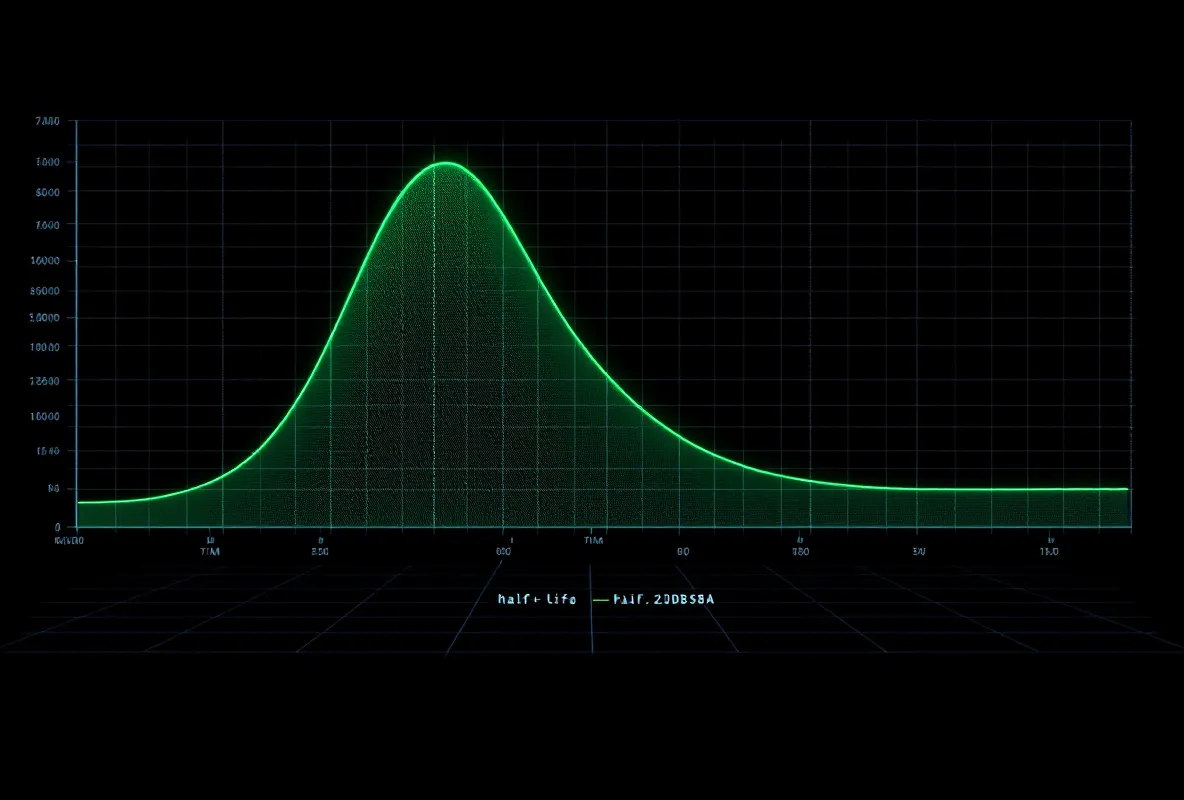
What ended first after Ipamorelin: the hormone peak or the drug
The growth-hormone peak came first, around 40 minutes after the dose [2]. Half the Ipamorelin was still in blood about two hours after dosing [2].
Both levels then fell, but the study did not give one shared end time. It measured blood changes, not how long you might feel stronger or sleep better.
Neither result means one dose keeps growth hormone high for days. The blood test did not prove that the men felt any benefit.
What animal work adds to Ipamorelin's blood time
In rats, Ipamorelin left blood more slowly than the older drug GHRP-6. Even so, it stayed briefly instead of building up.
A changed drug lasted longer in dogs because it was made to survive swallowing [7]. That drug was not Ipamorelin itself.
The dog result can't replace the human Ipamorelin finding. The vein study supplies the only useful timing for people.
What a sports test may find after Ipamorelin stops acting
Sports bodies ban Ipamorelin at all times. Drug-testing labs can look for it in urine.
A 2026 review says the drug's quick fall in blood leaves less time to catch it there [13]. Better tests help, but a fast fall can still leave a narrow chance for a blood sample.
A roughly two-hour blood time [2] is not a two-hour testing limit. Urine may hold the drug or its traces after the main action ends.
No sound source gives one sure testing window for every person. There is no safe countdown here for passing a test.